
Enterprise Link Building: A Complete Guide for Complex Websites
Link building is tough enough—but when you’re working with an enterprise-level website, the challenges get a whole lot bigger. More content. More teams. More red tape. More risk. But also? More opportunity.
If you’re managing SEO for a large business or high-traffic site, you already know the stakes. One good link can move the needle—one bad one can cause major problems. This guide walks you through a complete, advanced approach to enterprise link building that’s scalable, sustainable, and aligned with your brand’s long-term goals.

What Is Enterprise Link Building?
Enterprise link building refers to the process of acquiring high-quality, authoritative backlinks to a large-scale or complex website—typically with hundreds (or thousands) of pages, multiple departments, and tight brand guidelines.
Unlike typical link building, enterprise SEO involves:
- More internal stakeholders (legal, brand, dev, PR)
- Risk management concerns (link quality matters more)
- Scalable systems (one-off tactics won’t cut it)
- Cross-functional collaboration (SEO touches everything)
It’s less about short-term tactics and more about creating long-term digital equity.
Why Link Building Matters Even More for Enterprise Sites
You might think enterprise brands get backlinks “automatically” because they’re well-known. While some may earn passive links, intentional link building is still essential for:
✅ Supporting deep content indexing
✅ Helping new product pages rank
✅ Boosting category and commercial intent pages
✅ Protecting against competitors with stronger SEO strategies
✅ Keeping pace in fast-moving SERPs
Even if your domain has high authority, it doesn’t mean every page benefits from it. Strategic link building ensures key URLs gain visibility.
Key Challenges in Enterprise Link Building
Before we dig into strategies, let’s call out the roadblocks that typically slow down big-company SEO efforts.
1. Content Silos
Different teams “own” different parts of the website. Collaboration is tricky.
2. Approval Bottlenecks
Outreach and publishing often require legal or brand approval, delaying campaigns.
3. No Central Link-Building Strategy
Links happen—but there’s no system to track, scale, or evaluate link value across the organization.
4. Poor Internal Communication
SEO teams may not know about new product launches, campaign pages, or PR wins until it’s too late to leverage them for links.
5. Inconsistent Technical SEO
Redirects, duplicate content, or orphan pages can sabotage even the best link-building work.
Building a Scalable Enterprise Link Building Framework

To succeed with enterprise link building, you need a repeatable system—one that adapts to internal constraints while still delivering SEO results.
Let’s walk through how to build that framework from the ground up.
1. Set Clear Goals & KPIs for Link Acquisition
Before you start building links, ask:
- What pages need more authority?
- What keywords are we struggling to rank for?
- Are we prioritizing awareness, rankings, or conversions?
- How many links per quarter is realistic?
Common enterprise KPIs:
| Goal | Example KPI |
|---|---|
| Increase category rankings | 20 new backlinks to product category pages |
| Support content visibility | 50 new referring domains to blog subdomain |
| Reputation and authority | Backlinks from 10+ DR 70+ domains |
| Secure press coverage | 5 earned media placements per quarter |
2. Identify High-Impact Pages for Link Building
With thousands of URLs, you can’t target everything. Prioritize pages that:
- Have high commercial value
- Are stuck on page 2 or 3 of search results
- Already attract some backlinks (easy to grow)
- Are featured in paid campaigns (maximize ROI)
Use tools like Ahrefs, SEMrush, or Screaming Frog to audit and score your URLs.
3. Create Linkable Assets at Scale
For large companies, linkable assets aren’t just blog posts. They include:
- Research reports (original data = link magnets)
- Tools and calculators
- In-depth evergreen guides
- Glossaries or industry terminology pages
- Product comparison or competitor alternative pages
- Long-form educational hubs (for SEO + link equity)
🧠 Enterprise tip: Publish assets under brand-neutral, educational subdomains (e.g., /insights/ or /resources/) for easier outreach and broader link appeal.
4. Use a Mixed Link-Building Approach
Enterprise websites benefit from diversifying their link acquisition sources. Here’s how.
🔗 A. Editorial Outreach
- Reach out to journalists, bloggers, and trade publications
- Promote original research, insights, and tools
- Leverage HARO or Qwoted for expert quotes and citations
🔁 B. Link Reclamation
- Fix broken internal links
- Update redirects
- Reclaim lost backlinks to outdated URLs
📥 C. Digital PR
- Promote product launches, awards, CSR initiatives
- Get featured in news stories or industry roundups
🤝 D. Partnership & Co-Branding
- Collaborate on content with partners or vendors
- Earn mutual backlinks through co-marketing
🔍 E. Internal Link Building (HUGE for enterprise)
- Interlink valuable internal pages to pass authority
- Fix orphan pages that have no backlinks or internal links
5. Build Workflows That Involve the Right Teams
SEO doesn’t happen in a silo at the enterprise level. You’ll need to collaborate with:
| Team | Involvement |
|---|---|
| Content Marketing | Publishes and maintains linkable content |
| PR/Comms | Amplifies outreach, handles media relations |
| Dev/IT | Implements redirects, fixes technical errors |
| Legal | Reviews external pitches and content partnerships |
| Analytics | Tracks traffic and conversions from earned links |
🔄 Create shared SOPs, workflows, and calendars to keep everyone aligned.
6. Track and Evaluate Link Performance

Don’t just count links. Analyze what’s working:
- Which content earns the most links?
- Which outreach emails convert best?
- What link types correlate with ranking boosts?
Use KPIs like:
- Referring domains per page
- Domain rating (DR) of linking sites
- Anchor text diversity
- Referral traffic from earned links
- Rank improvement of linked pages
Enterprise Link Building Strategies That Work in 2025
Let’s zoom in on a few real-world link-building tactics that are delivering results for large websites today.
A. The Data-Driven Thought Leadership Play
Step 1: Conduct original research (survey your customer base)
Step 2: Turn the results into a long-form insights report
Step 3: Build press releases, blogs, and visual content around it
Step 4: Pitch to journalists, bloggers, and niche media
Example: “2025 State of Cybersecurity for Finance” → earns links from news outlets, security blogs, .gov domains, and partners.
B. Evergreen Resource Hubs with Smart Internal Linking
Create category-level landing pages like:
- “Everything You Need to Know About [Topic]”
- “Beginner’s Guide to [Tool/Process]”
- “Top [Niche] Trends in 2025”
Then link subtopics, blog posts, FAQs, glossary terms, and tools internally to that hub. This improves SEO and builds linkable authority for the pillar page.
C. Executive Visibility and Personal Branding
Turn your C-suite or experts into known voices in the industry:
- Contribute to major publications (Forbes, Fast Company)
- Host webinars and appear on podcasts
- Offer expert commentary via PR channels
Every quote or guest feature can drive backlinks to branded content.
D. Competitor Link Gap Analysis
Use Ahrefs or SEMrush to find where competitors have backlinks that you don’t.
- Look for patterns: Are they getting coverage in niche publications or guest posts?
- Identify top pages earning those links
- Replicate with better, more comprehensive content
Common Mistakes in Enterprise Link Building
Even smart teams can slip up. Avoid these pitfalls:
❌ Over-focusing on homepage links
You need links to deep content, not just the root domain.
❌ Ignoring technical SEO
Broken pages, bad redirects, or crawl issues make link equity vanish.
❌ Using black-hat tactics
One shady link can cause sitewide penalties at the enterprise level.
❌ No coordination between teams
Without alignment, SEO opportunities get missed or blocked.
FAQs: Enterprise Link Building
1. How many backlinks does an enterprise site need?
It’s not about quantity—it’s about quality and relevance. A few authoritative, industry-specific links can outperform hundreds of weak ones.
2. What’s the difference between enterprise and small-business link building?
Enterprise link building requires:
- More stakeholders
- Greater risk management
- Advanced internal coordination
- Scalable, system-based strategies
- Stronger technical SEO support
3. Should I outsource enterprise link building?
You can outsource some parts—like outreach or content creation—but strategy, prioritization, and approvals are best handled in-house.
4. How do I get buy-in from executives?
Tie link building to business metrics:
- Improved keyword rankings
- More organic leads
- Stronger brand authority
Use data and dashboards to demonstrate impact.
5. Are directory links useful at the enterprise level?
Only if they’re highly relevant and trusted, like industry associations, vendor listings, or software marketplaces (e.g., G2, Clutch).
6. What tools are best for enterprise link building?
Here’s a shortlist:
| Tool | Use Case |
|---|---|
| Ahrefs | Backlink analysis + gap reports |
| Screaming Frog | Technical audits and redirects |
| BuzzStream | Outreach management |
| Semrush | Competitor and backlink research |
| Google Search Console | Tracking and alerts |
7. How do I measure the ROI of enterprise link building?
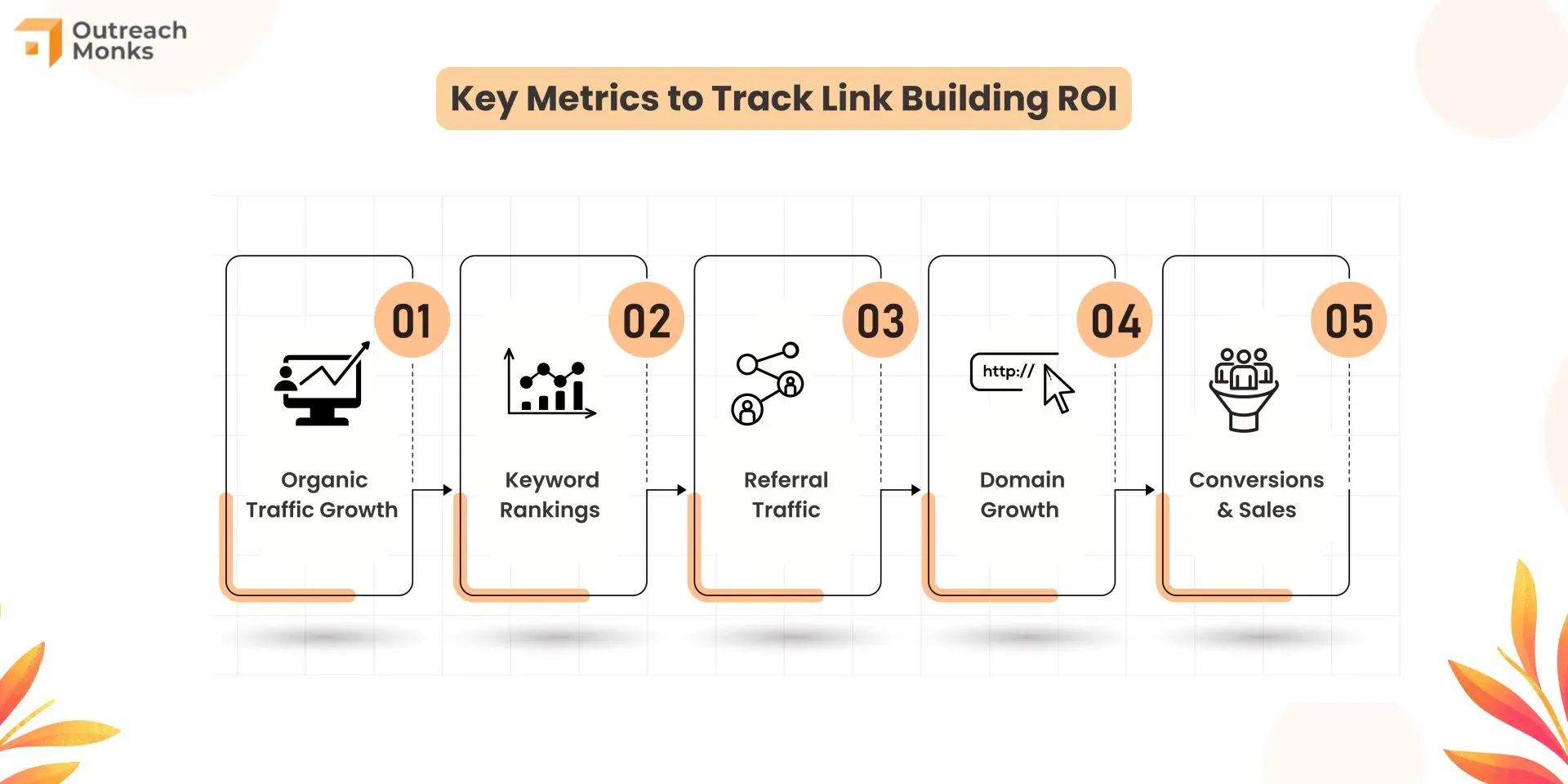
Use attribution models to connect backlinks to:
- Rank improvements
- Organic sessions
- Goal conversions
- Assisted revenue
Final Thoughts: Enterprise Link Building Is About Systems, Not Hacks
Link building at the enterprise level isn’t about chasing shortcuts or one-off wins. It’s about building a repeatable, ethical, brand-safe system that:
- Earns trust from both users and search engines
- Scales with your content and site growth
- Reinforces your brand’s position as an industry leader
The smartest enterprise SEO teams don’t just build links—they build assets, workflows, and relationships that power long-term authority and rankings.