
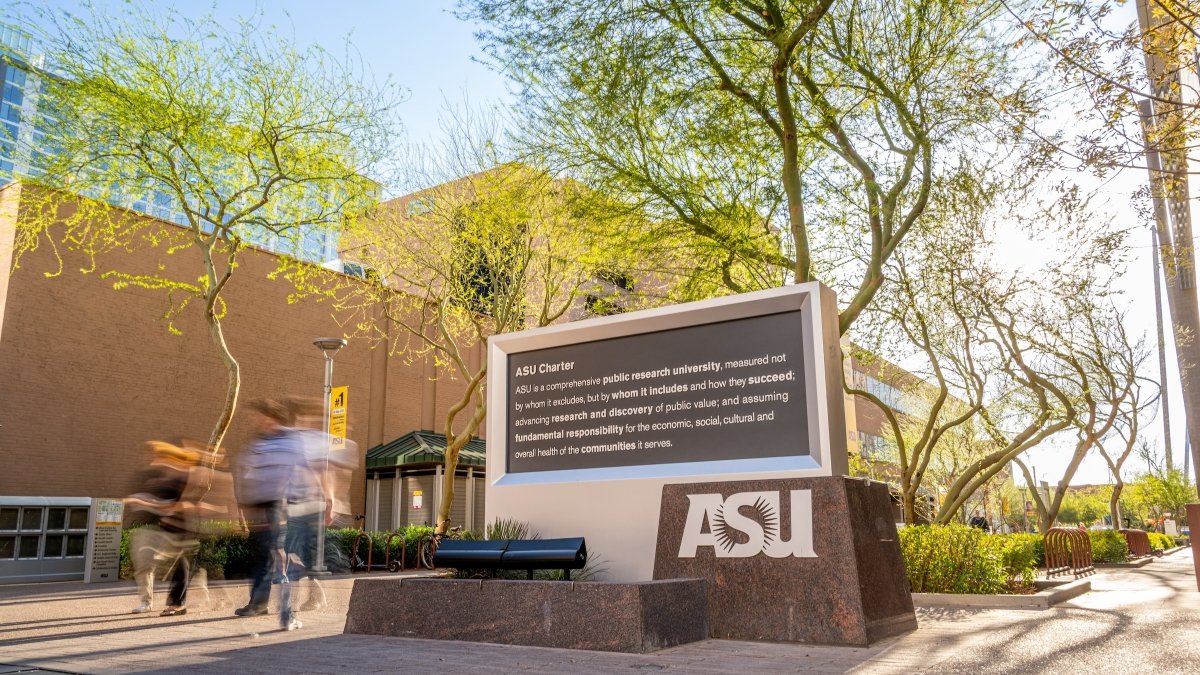
Arizona State University (ASU) has long been recognized not only for its academic excellence and innovative research but also for its strong focus on preparing students for successful careers. With a diverse array of programs spanning engineering, business, sustainability, technology, and the arts, ASU equips graduates with the knowledge, skills, and professional networks needed to thrive in today’s competitive job market. Beyond the classroom, the university actively connects students with employers through internships, career services, and global alumni networks, ensuring that ASU graduates are well-positioned to secure meaningful employment and make a tangible impact in their chosen fields. This article explores the career prospects, employment outcomes, and resources available to ASU graduates, highlighting why the university remains a top choice for students aiming to launch successful professional journeys.
High Employability & Employer Recognition
- According to a recent employer survey, ASU is ranked among the top U.S. institutions for employable graduates. In 2024, the Global Employability University Ranking & Survey (GEURS) placed ASU 13th among U.S. universities, and 34th globally for graduate employability. ASU Newsroom+1
- The strength of ASU’s “student–employer connections” has been especially recognized — ASU ranked #2 among U.S. public universities in that dimension. ASU News+1
- Employers hiring ASU graduates include major companies such as Amazon, Intel, Deloitte, Microsoft, Honeywell, PepsiCo, and others. ASU Newsroom+2ASU News+2
These facts underline that ASU isn’t just a big university — it’s one where employers actively look for talent and where being a graduate can give you real access to top-tier companies.
Employment Outcomes: What ASU Graduates Actually Achieve
General Employment / Job Offer Statistics
- For undergraduates, about 89% of ASU graduates were employed or had received a job offer within 90 days of graduation (based on 2018–19 data). provost.asu.edu+2Careers360 Study Abroad+2
- For graduate students, the same “90‑day employment or offer” figure has been ~92%. provost.asu.edu+1
- At the bachelor’s level in engineering (via the Fulton Schools of Engineering), about 81% of new graduates were employed or received a job offer within 90 days. Ira A. Fulton Schools of Engineering
- For students of business via the W. P. Carey School of Business: the Class of 2024 undergraduates had an average starting salary of about US$62,002. wpcarey.asu.edu+1
Field‑Specific Success Stories
Sustainability & “Green” Fields
Growing demand for sustainability‑oriented work has translated into excellent career outcomes for graduates of the Rob Walton College of Global Futures (ASU’s sustainability‑focused college). For the 2023 report:
- 90% of bachelor’s‑degree graduates were employed in a field related to their degree or went on to graduate school. For master’s‑degree graduates from the same college, the rate was 95%. ASU News
- Alumni work across private, public, nonprofit, government and academic sectors — including organizations like the Arizona Department of Environmental Quality (ADEQ), consulting firms, and international NGOs. ASU News+1
This suggests that for fields aligned with global trends like sustainability, ASU equips students to enter high‑demand, impactful careers.
What ASU Does to Support Students’ Transition to Work
Career Services, Employer Connections, & Internships
- Through W. P. Carey’s Career Services Center, business students get resume help, career coaching, access to hundreds of employers across 35+ industries, and participation in business‑only recruiting events. wpcarey.asu.edu+1
- ASU overall offers many opportunities for internships, co‑ops, and experiential learning, helping students build real‑world experience before they graduate — which improves employability and job readiness. standyou.com+1
- For sustainability students, ASU tracks alumni employment outcomes, showing how education aligns with workplace demand — and uses that data to refine curricula to match evolving job markets. Rob Walton College of Global Futures+1
A Large, Global Alumni Network & Diverse Employer Base
- ASU counts among its alumni tens of thousands of graduates working across industries globally, giving new grads access to mentoring, networks, referrals, and a broad pool of opportunities. wpcarey.asu.edu+2Arizona Impact+2
- Because ASU attracts recruiters from leading multinational companies as well as regional employers, graduates have flexibility — from large corporate roles (tech, consulting, manufacturing) to public-sector, nonprofit, sustainability-oriented, or entrepreneurial careers. ASU News+2Rob Walton College of Global Futures+2
What Careers ASU Graduates Often Enter — and Why That Matters
Thanks to ASU’s strengths and breadth of programs, graduates go into a wide variety of career paths. Some prominent ones:
- Technology & Engineering: Many graduates (especially from engineering or computer‑related degree programs) enter roles at major tech companies like Intel, Amazon, or other Silicon‑Valley and tech‑industry firms. ASU Newsroom+2ASU News+2
- Business, Finance, Consulting & Analytics: Business‑school grads from W. P. Carey — with their average starting salaries and high placement rates — often land positions in finance, consulting, marketing, operations, data analytics, or management. wpcarey.asu.edu+2wpcarey.asu.edu+2
- Sustainability / Environmental & Global Futures: Sustainability‑focused grads frequently work for government agencies, environmental nonprofits, consulting firms, or companies prioritizing “green” practices, due to rising global demand for sustainability expertise. ASU News+2Rob Walton College of Global Futures+2
- Public Sector, Education & Non‑Profits: Some graduates enter public service, education, government, or non‑profit work — especially relevant for those from social sciences, environmental studies, or global‑futures programs. ASU News+1
- Research / Academia / Graduate Studies: A portion of graduates — especially from engineering, science, sustainability or other academic fields — choose to pursue further education, research, or specialized professional training. Ira A. Fulton Schools of Engineering+2Rob Walton College of Global Futures+2
What the Data Shows: Long‑Term Impact & Economic Significance
- A large number of ASU alumni (hundreds of thousands) are actively working in Arizona and elsewhere, significantly contributing to the workforce. For example, in 2022 it was estimated that ~297,148 ASU graduates were employed in Arizona alone. economist.asu.edu+1
- These alumni generate considerable economic value: their aggregate earnings contributed substantially to state tax revenues, business growth, and local economic development. economist.asu.edu+2ASU Newsroom+2
- Moreover, beyond employees, many ASU graduates become entrepreneurs, start companies (often spin‑outs from ASU-supported research/innovation programs), or work in sectors that create further jobs — multiplying the university’s impact on the economy. ASU Newsroom+2Arizona Impact+2
Hence, an ASU degree is not just a credential — it often leads to long-term economic and professional value, whether as an employee or as a creator of new ventures/jobs.
Some Caveats & What You Should Do to Maximize Success
- As with any large university, results vary by field — outcomes are strongest in engineering, business, sustainability, and high‑demand disciplines. Less demand in saturated or less‑market fields could make job search more competitive.
- Success often correlates with how much you leverage ASU’s offerings: internships, career services, employer‑student events, networking, and relevant projects tend to make a big difference.
- Given global competition and changing job‑market dynamics (like automation, AI, remote work, visa or work‑permit issues for international students), it’s wise to build versatile skills — not just rely on “degree + brand name.”
- For non-U.S. or international graduates, ability to stay, work permits or residency might influence your ability to convert graduation → stable employment (depending on region and policies).
Conclusion
ASU stands out as a major institution not only for academic breadth and research — but also for creating real, measurable career and employment opportunities for its graduates. Strong employer connections, high placement rates, and a wide variety of academic programs allow ASU students to enter diverse, high-demand fields — from technology to sustainability to business and beyond.
If you join ASU, you have a powerful platform at your disposal: but success will likely depend on how proactively you engage (internships, networking, leveraging career services), and how well you align your education with evolving global job trends.