

How to Increase Domain Authority (And Reach #1 on Google)
If you’ve ever wondered why some websites seem to effortlessly rank on Google’s first page, while yours is stuck in traffic, the answer often boils down to two words: Domain Authority.
Improving your Domain Authority (DA) isn’t just about scoring a higher number in a third-party metric—it’s about building real trust with search engines and dominating your niche. In this comprehensive guide, we’ll break down exactly what Domain Authority is, why it matters, and give you pro-level strategies to increase it fast.
Let’s get started.
![How to Increase Domain Authority [And Reach #1 on Google]](https://www.globexoutreach.com/wp-content/uploads/2025/04/10-April-Feature-Image-1.jpg)
What Is Domain Authority (DA)?
Domain Authority (DA) is a metric developed by Moz that predicts how likely a website is to rank on search engine results pages (SERPs). It ranges from 1 to 100, with higher scores indicating stronger authority.
It’s calculated based on several factors, including:
- The number of linking root domains (unique websites that link to you)
- The total quality and relevance of backlinks
- The strength and trustworthiness of your website as a whole
⚠️ Important Note: Google doesn’t use DA directly as a ranking factor. But Moz’s DA is based on similar signals Google does consider—so it’s still a helpful benchmark.
Why Domain Authority Matters in 2025
Even though Google doesn’t officially use Domain Authority, it still reflects your website’s ranking potential.
Here’s why DA matters:
- Higher DA = Easier Rankings: Pages on high-DA domains often rank faster with less effort.
- Trust Signals: High DA tells search engines and users that your site is reliable and credible.
- Link Opportunities: Other websites are more likely to link to you if your DA is strong.
- Competitive Edge: In tough niches, DA can be the difference between position #1 and #15.
In short, if you want to outrank your competitors on Google, boosting your DA should be a key part of your SEO game plan.
How Is Domain Authority Calculated?
Moz uses a complex machine-learning algorithm that considers over 40 ranking signals, but the main components include:
| Factor | Impact on DA |
|---|---|
| Total number of backlinks | More quality links = higher DA |
| Quality of linking domains | Links from trusted sites boost DA |
| Linking root domains | Unique referring domains matter more |
| Spam score | Low spam = better DA |
| Internal linking structure | Strong on-site architecture helps |
| Site trust, age, and relevance | Long-term credibility supports DA |
Tip: Use Moz’s Link Explorer to check your current Domain Authority and link profile.
15 Proven Strategies to Increase Domain Authority (Fast)
Ready to start climbing the authority ladder? Here’s how to do it—step by step.

1. Build High-Quality Backlinks
Backlinks are the #1 ranking factor behind Domain Authority. Focus on acquiring relevant, editorial links from trusted websites.
How to get them:
- Guest blogging on niche authority sites
- Digital PR campaigns
- HARO (Help a Reporter Out)
- Creating original research or data studies
- Outreach to bloggers and influencers
🎯 Quality > Quantity: A single backlink from Forbes or HubSpot is more valuable than 100 low-tier blog comments.
2. Improve On-Page SEO
Even if you have backlinks, poor on-page SEO can hold your rankings—and DA—back.
Make sure to:
- Use proper H1, H2, and H3 structure
- Optimize title tags and meta descriptions
- Include keywords naturally in content
- Optimize image alt tags
- Use internal linking to spread authority
3. Create Link-Worthy Content (a.k.a. Linkable Assets)
People don’t just link to anything—they link to valuable, helpful, original content.
Types of content that earn links:
- Original data or case studies
- How-to guides and tutorials
- Expert roundups
- Infographics
- Free tools or calculators
Create “10x content” that’s 10x better than anything else on the topic, and watch the backlinks roll in.
4. Conduct a Full Backlink Audit
Toxic or spammy links can drag down your DA—and your Google rankings.
Use tools like Ahrefs or SEMrush to:
- Identify low-quality, irrelevant, or spammy backlinks
- Disavow harmful links using Google’s Disavow Tool
- Strengthen your profile with quality links to offset poor ones
5. Increase Your Linking Root Domains
It’s not just about the total number of backlinks—it’s about how many unique sites link to you.
Strategies to grow root domains:
- Get links from directories, blogs, and forums in your niche
- Pitch guest posts to new sites monthly
- Create resources others naturally want to reference
6. Strengthen Internal Linking
Don’t underestimate the power of internal links—they pass authority between your pages and help Google crawl your site efficiently.
Best practices:
- Use descriptive, keyword-rich anchor text
- Link to cornerstone content from other posts
- Avoid orphan pages (pages with no links pointing to them)
7. Fix Technical SEO Issues
Google favors websites that are easy to crawl, fast, and secure.
Perform a technical audit and fix:
- Broken links
- Crawl errors
- Duplicate content
- Slow loading speeds
- Non-mobile-friendly designs
- Missing XML sitemap or robots.txt
8. Get Your Site Indexed Quickly
Unindexed pages can’t rank or pass authority.
To speed up indexing:
- Submit new pages via Google Search Console
- Use internal links to drive bots to fresh content
- Share on social media or syndicate to drive traffic
9. Boost Page Speed
Site speed is a confirmed ranking signal. A faster site = better UX = better SEO = higher DA.
Speed tips:
- Compress images
- Use lazy loading
- Leverage browser caching
- Use a CDN (Content Delivery Network)
- Minimize code (HTML, CSS, JavaScript)
10. Create a Scalable Content Strategy
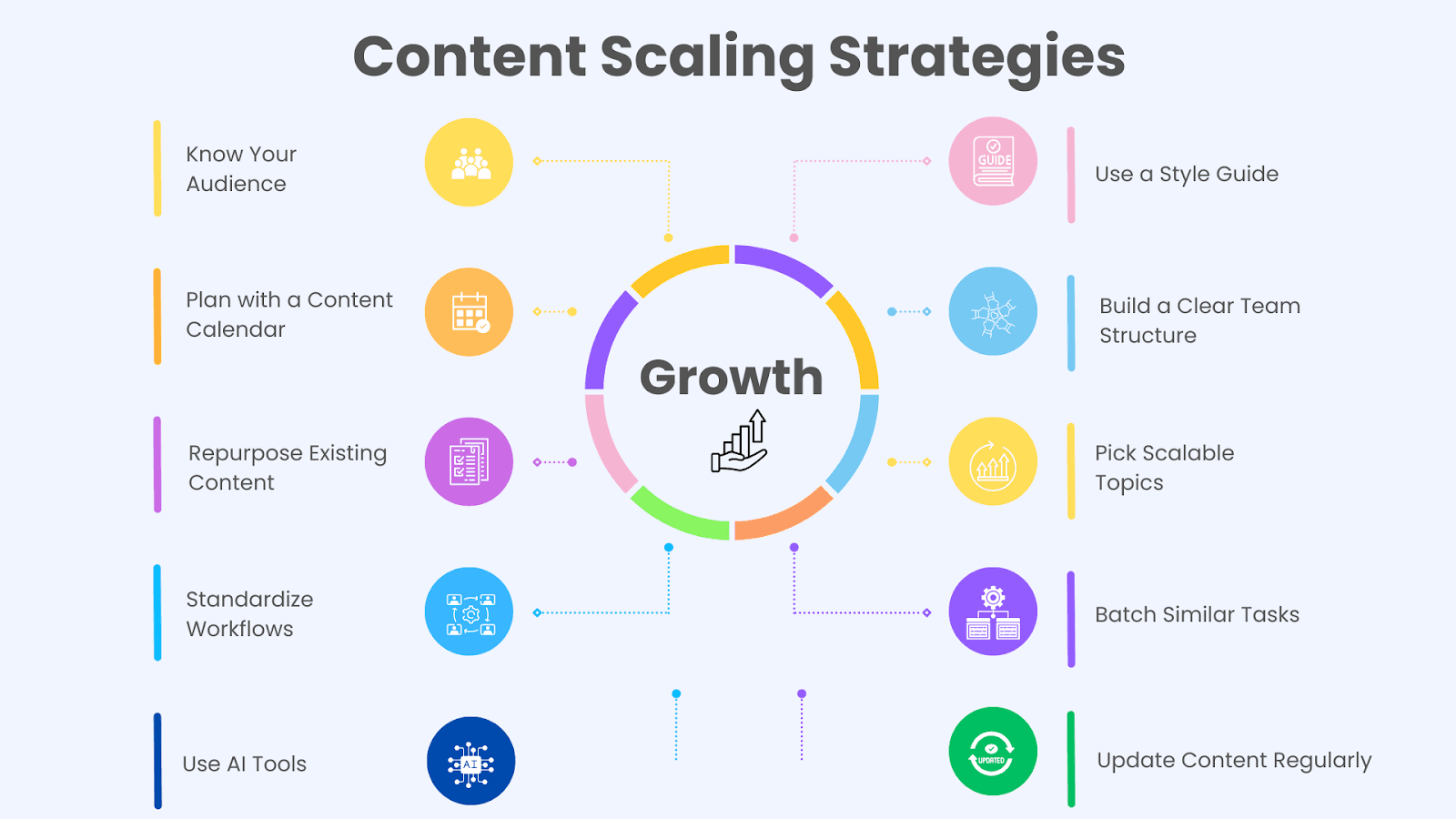
Fresh, helpful content tells Google your site is active and valuable.
Create a publishing calendar and focus on:
- Answering common industry questions
- Covering long-tail keywords
- Updating old content to keep it relevant
11. Build Topical Authority
Google rewards depth of coverage. Instead of one-off posts, build clusters around related topics.
Example:
- Main topic: Email Marketing
- Cluster: email subject lines, cold email tips, email list growth, A/B testing, etc.
Link them all together to show search engines your expertise.
12. Promote Your Content Aggressively
Publishing content is just the start. Promotion ensures people see it—and link to it.
Promote by:
- Email outreach to bloggers/journalists
- Posting on LinkedIn, Reddit, Facebook Groups
- Using paid ads (for high-value pieces)
- Syndicating to platforms like Medium or Flipboard
13. Gain Mentions and Brand Awareness
The more your brand is seen online, the more likely people are to link to you.
Tactics include:
- Podcasts interviews
- Webinars or speaking gigs
- Hosting free events
- Publishing on Medium or Substack
14. Maintain a Clean Link Profile
DA can drop if your site picks up spammy backlinks or experiences link decay.
Stay clean by:
- Monitoring new backlinks weekly
- Disavowing harmful links
- Reclaiming lost or broken backlinks
15. Be Patient and Consistent
Domain Authority doesn’t jump overnight. It’s a compound effect of long-term SEO and smart content strategy.
Focus on consistent execution over 6–12 months, and your DA will steadily climb.
What Is a Good Domain Authority Score?

Here’s a rough guideline:
| DA Score | Meaning |
|---|---|
| 1–20 | New or low-authority site |
| 20–40 | Average—growing authority |
| 40–60 | Strong—competitive visibility |
| 60–80 | High authority—ranking potential |
| 80–100 | Elite—think Wikipedia or Google |
Don’t obsess over hitting 90+. Just aim to beat your competitors in your niche.
FAQs: Increasing Domain Authority
1. How long does it take to improve Domain Authority?
It typically takes 3–6 months to see noticeable changes, depending on how competitive your niche is and how aggressive your link-building and SEO efforts are.
2. Can Domain Authority go down?
Yes. DA can drop if:
- You lose backlinks
- Your backlink quality drops
- Competitors build faster than you
- You get penalized or spammed
Monitor DA regularly and take action when needed.
3. Is Moz the only source for DA?
No. Other tools use similar metrics:
- Ahrefs: Domain Rating (DR)
- SEMrush: Authority Score
- Majestic: Trust Flow & Citation Flow
They all reflect similar signals—use them to compare and track progress.
4. What’s more important: DA or actual rankings?
Rankings and traffic matter more than DA. DA is just a proxy. It’s useful for benchmarking and outreach but not a goal in itself.
5. Should I buy backlinks to increase DA?
No. Buying links is risky, often against Google’s policies, and can lead to penalties. Focus on earning backlinks through value-driven content and relationships.
6. Do internal links help Domain Authority?
They don’t directly impact DA, but they improve site structure and ranking potential, which influences overall authority.
7. Can social media help improve Domain Authority?
Social links are usually nofollow, so they don’t pass SEO juice directly. However, they increase visibility, which can lead to more organic backlinks.
Final Thoughts: Domain Authority Isn’t Magic—It’s Momentum
Raising your Domain Authority isn’t about gaming the system. It’s about doing the hard work—earning trust, building great content, and attracting quality links.
Here’s your cheat sheet:
✅ Build backlinks from trusted, relevant sites
✅ Improve technical and on-page SEO
✅ Create content people actually want to link to
✅ Monitor and maintain your link profile
✅ Stay consistent, and DA will rise over time
Don’t just chase the number—chase the authority behind it. Nail that, and the top of Google is well within reach.